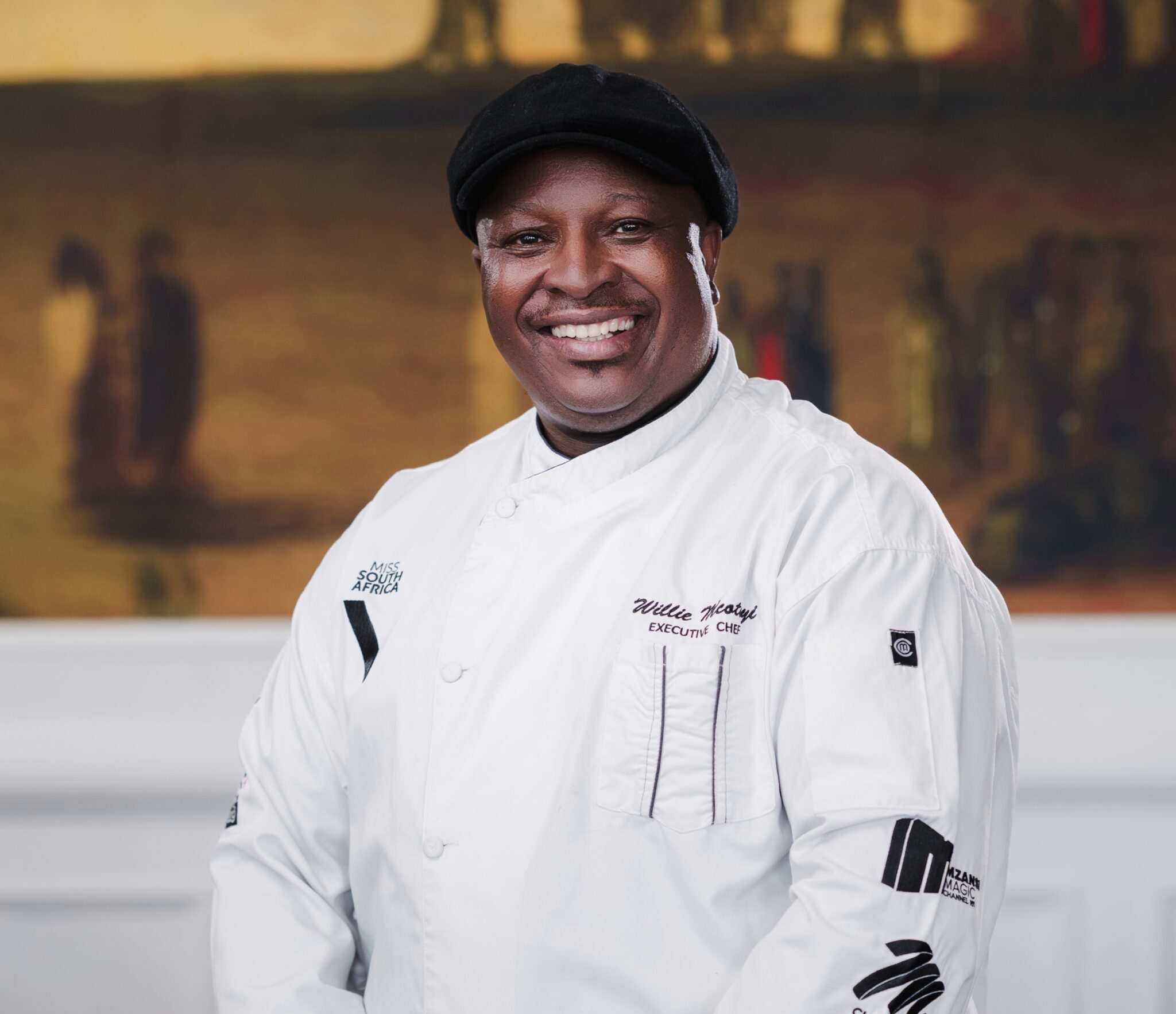
Behind every great dish is a great story, and for Boardwalk’s executive chef Willie Mcotoyi, that story began in Cape Town. Married to Christie for 38 years and a proud father of three children (two sons and a daughter) his journey into the culinary world started in 1994 at the Basics Kitchen Academy in Langa, when he was 23 years old. From there, Mcotoyi took his first steps in the bustling kitchen of the Cape Sun Hotel, where he moved quickly from humble preparation tasks to demi chef de partie.
What began as peeling onions and assisting senior chefs soon grew into a passion and career that would take him across South Africa and abroad to Germany and the US, where he gained invaluable exposure to global food cultures. Each role sharpened his skills, deepened his love for food, and cemented his leadership style.
“My path spans from Cape Town’s V&A Waterfront to The Palace at Sun City in the North West, and later Boardwalk, where I have been since 2021,” says Mcotoyi. “Each role gave me more responsibility, from sous chef to head chef, to executive chef managing large teams and high-volume catering. At Boardwalk, I continue to grow, lead teams of up to 45 chefs, and maintain the highest food standards.”
Mcotoyi’s formal qualifications include Food and Beverage Management at the International Hotel School, Leadership and Management at the University of Pretoria, and a diploma from HTA School of Culinary Art. However, he credits much of his success to the hands-on learning he experienced in some of the world’s busiest kitchens. Today, at Boardwalk Hotel & Casino in Gqeberha, he leads his team with the same philosophy he’s carried throughout his career: uncompromising quality, strong financial awareness, and a passion for mentoring young chefs, something which is close to his heart, fostered by those he himself has worked under, especially those who showed strong leadership and never compromised on quality. “Their lessons shaped my own approach,” he says.
“I believe in leading with honesty, motivating my team, and nurturing the next generation of chefs. I hope to see more female chefs rise in the industry, and my advice to young talent is simple – love what you do, have the right attitude, focus on quality, and keep things simple.”
Leading large kitchens, running international operations, and being trusted to manage both food and finance, are among Mcotoyi’s proudest moments. “Watching my teams grow under my leadership has been especially rewarding,” he adds. “More than anything, I want them to overtake me, rise above me. They must soar.”
Mcotoyi advocates several key things for success in this highly demanding profession: remain calm, a love for food, have the right attitude and passion, keep things simple, remain dedicated to the craft, and commitment to being a better chef. Because for Mcotoyi, being a chef isn’t just a career, it’s a lifelong way to celebrate both tradition and innovation on every plate he serves.
Over the past five years, he’s noticed a clear shift in the food and beverage industry. “There’s much more focus now on cost control, financial awareness, and sustainability,” he says. “Chefs today don’t just cook; they must understand budgets, ratios, and margins. Standards are higher, and customers expect quality and consistency at all times.”
Interaction with clients and getting feedback to foster improvement have helped Mcotoyi progress to where he is today. “It has helped me grow, and be a better chef.”
At the same time, food trends have been leaning towards authenticity. Heritage cuisine is enjoying a resurgence, with local and international diners seeking out traditional African dishes that showcase local ingredients and culture.
“People want authentic African cuisine, not just Westernised menus,” says Mcotoyi. “We’re bringing back traditional dishes, showcasing local ingredients, and giving overseas guests the chance to experience Africa through food.”
This includes dishes with venison like springbok and impala, oxtail, samp and beans. This Heritage Day, Mcotoyi is going back to African roots with lamb on the spit, fish and oxtail potjies with dodorhoyi (dumplings in isiXhosa), bobotie, pap, and Cape Malay curries. For dessert, there will be South African sweet treats like koeksusters and melktert (milk tart).
“We need to let the world experience Africa through African cuisine,” he says.
Fresh local ingredients, especially those that highlight African heritage, are crucial. “I love showing how simple, authentic produce can create world-class dishes,” he says. Boardwalk supports local farmers, with about 90% of the produce coming from close proximity to the property.
Mcotoyi’s favourites reflect simplicity and adventure. He never tires of making a classic lamb shank with creamy mashed potatoes. “The meat is braised low and slow until it’s tender and soft. Rosemary, red wine and pesto jus makes the dish perfect.”
Try Chef Willie’s Braised Oxtail & Dodorhoyi Recipe
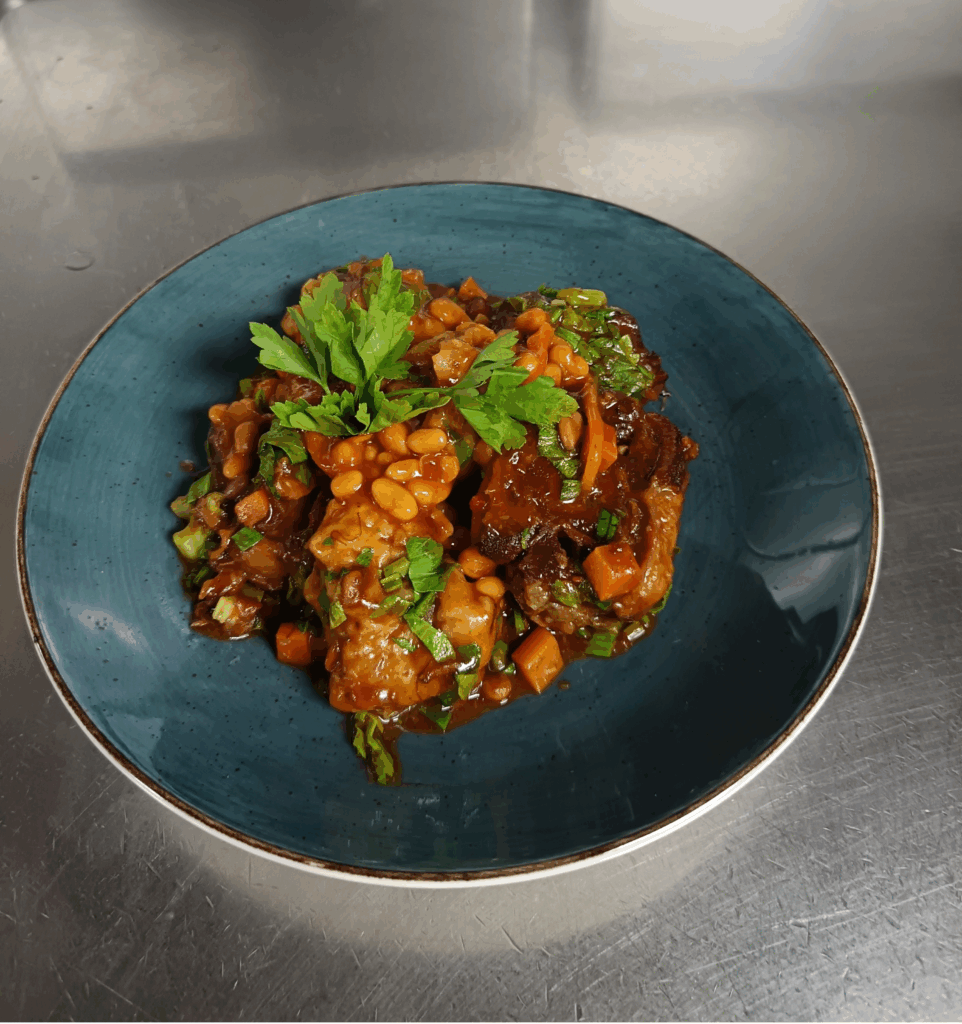
Oxtail ingredients
· 1.5–2 kg oxtail pieces, trimmed
· 3 Tbsp vegetable oil
· 2 medium onions, chopped
· 2 carrots, diced
· 2 celery sticks, diced
· 4 garlic cloves, minced
· 1 can (410 g) baked beans in tomato sauce
· 2 Tbsp tomato paste
· 2 large tomatoes, chopped (or 1 can chopped tomatoes)
· 2 bay leaves
· 3 sprigs fresh thyme (or 1 tsp dried)
· 1 sprig rosemary (optional)
· 2 cups beef stock
· 1 cup red wine (optional, or replace with extra stock)
· 2 Tbsp Worcestershire sauce
· 2 tsp paprika
· Salt and black pepper, to taste
· 2 Tbsp flour (for dusting the meat)
· Fresh parsley, chopped (for garnish)
Dumplings ingredients
· 2 cups cake flour (or all-purpose flour)
· 2 tsp baking powder
· ½ tsp salt
· 2 Tbsp butter, softened
· ¾ cup milk (or water)
· 1 tbsp fresh parsley, chopped (optional)
Method
1. Prepare and sear the oxtail
Pat the oxtail dry, season with salt and pepper, and lightly dust with flour. Heat the oil in a large, heavy-based pot. Brown the oxtail in batches until golden, then set aside.
2. Build the base
In the same pot, sauté the onions, carrots, and celery until softened. Add the garlic and cook for another minute. Stir in the tomato paste and cook for 2 minutes to develop depth of flavour.
3. Deglaze and flavour
Pour in the red wine (if using) and allow it to reduce slightly while scraping up any browned bits. Add the chopped tomatoes, Worcestershire sauce, paprika, thyme, bay leaves, and rosemary.
4. Slow cook
Return the oxtail to the pot and pour in the stock until just covering the meat. Bring to a gentle boil, then reduce the heat to low. Cover and simmer for 3 to 3½ hours, or until the oxtail is meltingly tender. (Alternatively, cook in a preheated oven at 160°C for the same time.)
5. Prepare the dumplings
Mix flour, baking powder, and salt in a bowl. Rub in the butter until the mixture resembles breadcrumbs. Stir in the milk to form a soft dough, then shape into small balls about the size of a golf ball.
6. Finish with dumplings
In the last 25–30 minutes of cooking, arrange the dumplings on top of the stew. Cover tightly with a lid and allow them to steam until puffed and cooked through. Avoid lifting the lid during this time.
7. Serve
Remove the bay leaves and herbs. Spoon the oxtail and its rich gravy into bowls, top with dumplings, and garnish with fresh parsley. Serve with mashed potatoes, rice, or enjoy as is.